
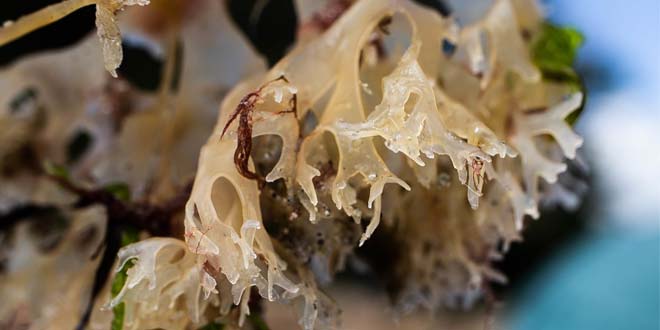
Irish sea moss is a type of red algae which has many proven health benefits which range from boosting immunity to preventing signs of aging. There is a lot of scientific research which backs up these health benefits, which is why sea moss supplements and gels have suddenly become so popular.
What Is Irish Sea Moss?
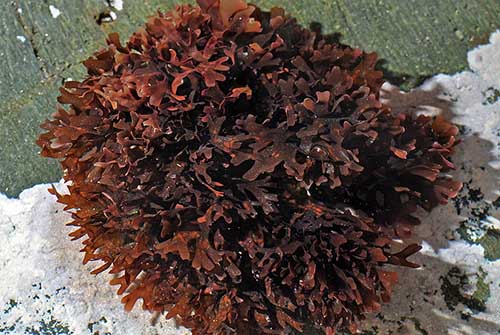
Irish moss is a type of red algae that grows on the Atlantic coastlines of North America, and Europe. The reason it is called “Irish” sea moss is because it was consumed during the Irish famine.
You’ve probably consumed sea moss without even realizing it. It’s a source of carrageenan, which is used as a thickener for many foods. Just note that the natural carrageenan in sea moss is different than the highly-processed chemical versions you’ll find in junk foods.
What Does Irish Sea Moss Look Like?
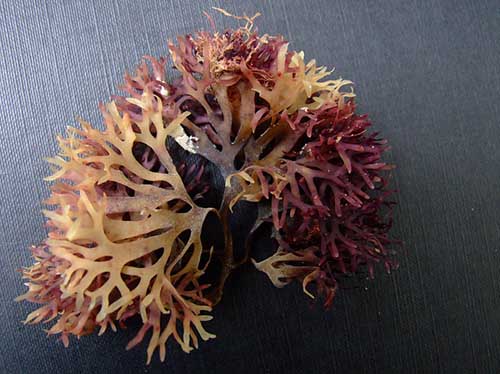
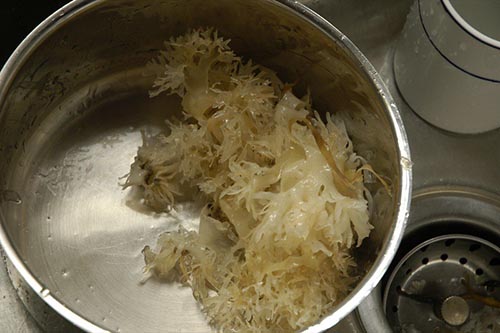
In the sea, Irish sea moss can be green, red or dark purple but turns a translucent yellowish color when sundried. It is completely normal for sea moss products to have color variations, such as streaks of color on dried sea moss.
Irish Sea Moss vs. Other Types of Sea Moss
The latin name for Irish sea moss is Chondrus crispus. However, there are many other types of red algae which are also sometimes called Irish sea moss. For example, the Gracilaria genus of sea moss is popular in the Caribbean. Irish sea moss tends to have thinner blades whereas other sea moss has wider, fan-like blades.
Irish sea moss, Gracilaria and other types of sea moss all have similar health benefits – just those other types of sea moss haven’t gotten as much attention as chondrus crispus. Because Caribbean sea moss grows year round, it is much more common than chondrus crispus products. Unfortunately, this has led to a lot of bad reviews online with people saying they got “fake” sea moss because manufacturers weren’t clear about which type they were selling.
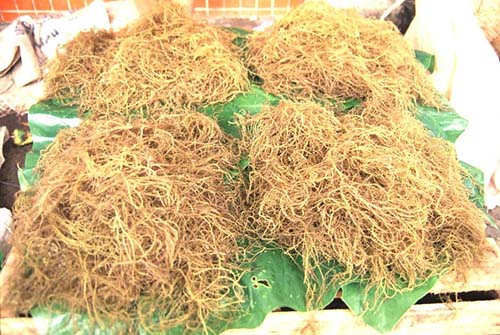
Wild Harvested vs. Pool-Grown Sea Moss
While the species of sea moss you buy might not make a big difference in terms of health benefits, whether it is wild-harvested or pool-grown can. Compared to sea moss harvested along coastlines, pool-grown sea moss is devoid of nutrients. A lot of people buy pool-farmed sea moss because it is cheaper without realizing that they aren’t going to get the same nutritional benefits.
Recommended Product: Atlantic Naturals Sea Moss Capsules
1000mg of pure Irish sea moss (chondrus crispus) per dosage with no fillers or additives in vegan capsules.

Irish Sea Moss Health Benefits
Note that other types of seaweed – including the many red algae incorrectly called Irish sea moss – also have health benefits. However, here I am only going to talk about the benefits of chondrus crispus which have actually been backed up by scientific research. You can find links to the research papers and scientific journals at the end of this article.
Great for Skin and Hair
Irish sea moss is great for skin and hair on multiple fronts. For starters, it consists of 55% carrageenan, which is excellent at holding moisture. It also binds to keratin fibers. This is why sea moss gel is such a great moisturizer and makes skin and hair soft. Carageenan is also believed to break fat cells apart (lipolysis), so could help fight cellulite.
On an even more scientific note, Irish sea moss contains exopolysaccharides, a type of carbohydrate which improves communication between skin cells including collagen-producing fibroblasts. Wrinkles form when collagen breaks down so sea moss can prevent signs of aging. One study found that algae cream increased dermal thickness by 15% and collagen density by 2.4% after just 56 days.
In addition to this, sea moss also contains many nutrients and has anti-inflammatory and antimicrobial properties. Thus, sea moss supplements and gels can have skin and health benefits including:
- Reduced wrinkles and other signs of aging
- Softer skin and hair
- Heal wounds faster
- Treating acne
- Natural treatment for psoriasis and eczema
Source of Minerals
Sea moss is famous because it contains 99 of the 102 minerals that the body is made from. While this claim is a bit misleading (your body won’t absorb all of those nutrients from the algae), sea moss is still an excellent source of nutrients. It is especially a good source of iron, calcium, zinc, vitamins K, B vitamins, and trace elements.
Because seaweeds contain a lot of iodine (which is harmful in large doses), you won’t be able to meet all of your nutrient requirements with sea moss supplements – but a little bit goes a long way towards boosting overall health.
Gut Health
Another way that sea moss helps gut health is by balancing gut microbiota (the bacteria which live in our digestive tract). It works by serving as food for health bacteria in the gut, thus allowing them to thrive and keep our gut bacteria balanced.
We now know that many health issues ranging from autism to anxiety disorders are linked to gut health. Gut health is also key to a healthy immune system. This is why sea moss is gaining popularity as an antibiotic alternative for chickens: studies show that supplementing with sea moss improves the immune health in chickens and even prevents Salmonella.
Anti-Inflammatory
Sea moss contains numerous anti-inflammatory bioactive compounds. These include flavonoids, phenols, tannins, chlorophyll, and omega 3 fatty acids. Studies show that these reduce levels of free radicals in the body and may be effective for reducing inflammation linked to cardiovascular disease and metabolic diseases. Extracts of sea moss was even strong enough to kill human cancer cells. Also see these superfoods which reduce inflammation.
Antibacterial and Anti-Viral
Sea moss has the ability to kill bacteria, viruses, and other pathogens in multiple ways. For example, it prevented bacteria from forming biofilms, which are a layer of film that bacteria form to protect themselves against immune attacks. Irish sea moss was also able to block bacteria motility, growth and quorum sensing. Because Irish sea moss also contains antioxidants and aids gut health, it will boost your immunity so you can fight off infections better.
The antibacterial properties of Irish sea moss are one of the reasons it is great for treating acne. It will kill the bacteria which cause pimples while simultaneously reducing redness from inflammation.
Migraines, Depression, Parkinson’s Disease and Psoriasis
These health conditions might not seem similar but they are all linked to increased nitric oxide production. One of the lesser-known benefits of sea moss is that it reduces nitric oxide. Thus, sea moss is a potential treatment for these conditions. Also see these natural remedies for psoriasis.
Sooths Mucus Membranes
Like aloe, cactus and chia seeds, sea moss is a mucilaginous food. It forms a gel-like substance when soaked in water. The gel helps sooth mucus membranes in the body, which includes your digestive tract. In this way, sea moss smoothies can be very good for treating SIBO, leaky gut syndrome, and IBS. It is also a good natural treatment for respiratory ailments like coughs.
Unproven Benefits
Sea moss is often used to increase sperm count and libido in men. However, there is little evidence that sea moss works for this. Many people also use sea moss for weight loss. Because sea moss has lots of fiber, it can make you feel full for longer and help weight loss in this way. However, it’s probably not going to be better for weight loss than other high-fiber supplements like aloe vera.
How to Prepare Dried Irish Sea Moss
Traditionally sea moss was simmered and consumed as a broth. Because simmering can destroy nutrients in the moss, it is better to consume it raw. To prepare:
- Rinse the sea moss under cold water
- Soak 1 cup of sea moss in 2 cups of filtered water for an entire day. It should double in size.
- Discard the soak water.
- Put the soaked sea moss in a blender with filtered water. Use just enough water to create get a lump-free texture when blending.
- Blend until smooth.
- Store in the fridge.
How Long Will Irish Sea Moss Gel Last?
Stored in an air-tight container in the fridge, homemade sea moss gel should last 2-4 weeks. Signs that the sea moss gel has gone bad include:
- Becomes a gray or darker color
- Starts smelling bad
- Develops a slimy film layer on it
- Has a sour taste or smell
- Mold growing on it
How to Use Irish Sea Moss
Once you’ve made your sea moss gel, you can use it multiple ways.
- Add to smoothies: Sea moss doesn’t have much of a flavor so it can be added to any smoothie. For the best taste and texture, use 1-2 Tbsps. of sea moss gel per cup of smoothie.
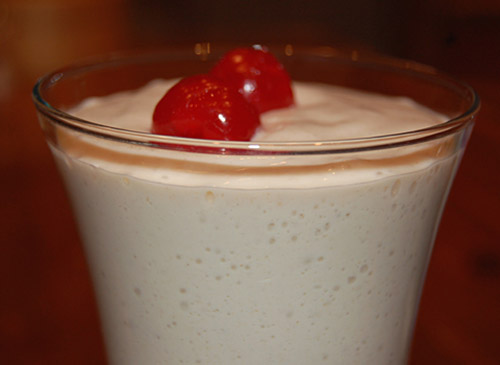
- Beverages: Sea moss gel is used to make a lot of sweet beverages with coconut milk or condensed milk as their base. A simple recipes involves blending 4 Tbsp. of sea moss gel, 2 cups of plant milk, 2 Tbsp of coconut cream, ¼ cup of sweetener or 4 pitted dates, 1/8 tsp. of nutmeg and 1/8 tsp. of cinnamon.
- As a thickener for soups: Add the sea moss gel after you’ve finished cooking the soup to preserve nutrients.
- Desserts: Sea moss gel can easily be added to desserts like pudding. Just mix the sea moss gel into the pudding before it finishes setting.
- Skin mask: You can apply a thin layer of sea moss gel directly to your skin, let it sit, and then rinse off. For a thicker mask, mix the sea moss gel with oatmeal, avocado puree, honey, or any other ingredients you’d usually put in a skin mask.
- Hair mask: Apply the sea moss gel directly to your hair. Let it sit for 30 minutes before rinsing.
- Tea or Broth: If you use more water when blending the sea moss, you can turn it into a tea. Add lemon or spices like cloves for flavor.
Best Irish Sea Moss Supplements
All of these supplements use wild harvested sea moss and not sea moss grown in pools. Most of the supplements contain the chondrus crispus species (“true” Irish sea moss) but there are a few quality products which use sea moss from the Caribbean.
*Note that Irish sea moss isn’t the only type of algae which has health benefits. For this reason, you’ll often find sea moss formulated with bladderwrack, another algae which has many well-researched health benefits.
Dried Raw Sea Moss
Herba Organica Dried Irish Sea Moss
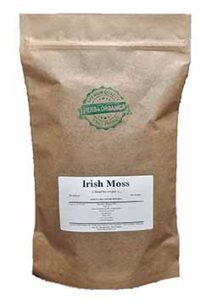
This wild-harvested Irish sea moss is legit Chondrus crispus, is very clean and doesn’t have much sand on it. It comes in 3.5oz and 7oz packages. I like that the packaging doesn’t let light through so more nutrients remain intact.
VitaminSea Irish Sea Moss
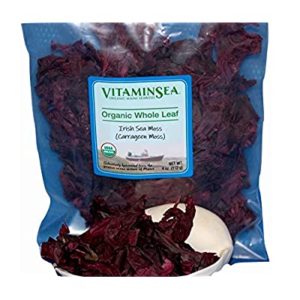
This chondrus crispus sea moss is harvested off of the coast of Maine in the North Atlantic Ocean. It is a legitimate product and typically has dark red blades (it is normal for algae to vary in color). It smells a bit when you remove it from the packaging but the fish smell goes away after washing and soaking. They also sell sea moss flakes in addition to whole blades.
Jamaica Organix Irish Sea Moss
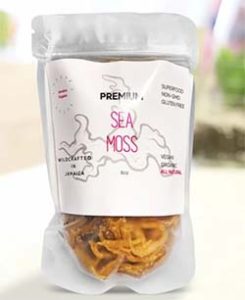
This dried sea moss is wild-harvested on the coasts of Jamaica. For this reason, it is probably not actually chondrus crispus but another species of sea moss. Because other types of sea moss also have benefits, this product is still recommended. It comes in 6oz and 1lb bags; the 1lb bag only costs a bit more than the 6oz bag, so it’s the better deal. There is quite a bit of sand on this sea moss so make sure you clean it well.
Holistic Bin Irish Sea Moss

Harvested from Casco Bay off the coast of Maine, this is a trustworthy product. It is a cut smaller so you’ll want to use a strainer when rinsing it. The same brand also sells other types of sea moss from the Caribbean.
Irish Sea Moss Gel
92 Minerals Irish Sea Moss Gel

This is probably the best Irish sea moss gel you can get if you don’t want to make it yourself. It is made to order, so is fresher than other pre-made gels and has a better shelf life. It even comes in a mason jar in a cooler. There are no preservatives or additives in the gel so you can eat it or use it on your skin and hair. There are 8oz and 16oz options available.
Jefe Organics Sea Moss Gel

The sea moss in this gel is wild harvested from the Caribbean but the gel is made in Michigan. There are no additives or preservatives (which means you need to keep the gel refrigerated and use it within 3 weeks).
Sea Moss Capsules
Atlantic Naturals Sea Moss Capsules
These sea moss capsules are made with sea moss wild-harvested off of the coast of Nova Scotia in Canada. They are pure sea moss and don’t contain any other supplements. There is 1000mg per dosage. A dosage is 2 capsules, so one bottle will last you 60 days. The capsules are vegan.
Herb Therapy Irish Moss Capsules

These vegan capsules contain a blend of Irish moss (chondrus crispus species), bladderwrack and burdock root. They are certified organic, gluten free, and don’t contain any fillers or additives. There is 1500mg per dosage. A dosage is 2 capsules, so one bottle will last you 50 days.
Bloom Irish Sea Moss Capsules

These capsules are vegan, non-GMO, gluten-free, and made in the USA. A dosage contains 800mg of Irish sea moss (chondrus crispus) and 800mg of bladderwrack. There are two capsules per dosage, so a bottle will last you 60 days.
Other Sea Moss Supplements
Chondrus Crispus Tincture

This brand makes high-quality tinctures. Their Irish sea moss tincture uses real chondrus crispus with an extract rate of 330mg of dry matter per 1ml. The tincture comes in various sizes and they also have an alcohol-free version of the tincture. This alcohol version is more potent though.
Organic Earth Irish Sea Moss Powder

Made from a blend of Irish sea moss (Chondrus crispus), bladderwrack, and burdock, this powdered supplement is certified organic. There are no fillers or additives, it’s vegan and gluten-free, and the company is very transparent about its practices and certification. This is great for smoothies as a digestive health supplement or nutrient boost. It doesn’t work well for skin masks though.